Many men live with low testosterone symptoms for years before realizing hormones may be part of the problem.
Low energy gets blamed on stress. Reduced motivation starts feeling like aging. Workouts become less effective, recovery slows down, libido changes, and mental fog gradually becomes part of daily life.
The problem is that symptoms of low testosterone often develop slowly. Because the changes happen gradually, many men normalize them instead of recognizing that something may actually be wrong.
At the same time, not every symptom automatically means low testosterone. Fatigue, weight gain, poor sleep, and mood changes can also be linked to stress, lifestyle habits, or underlying medical conditions. That is why proper testing matters.
So, let’s take a closer look at the most common low testosterone symptoms, the causes behind hormonal decline, how low testosterone is diagnosed, and when treatment or Testosterone Replacement Therapy (TRT) may be appropriate.
What Is Low Testosterone (Low T)?
Low testosterone, often called Low T, happens when the body does not produce enough testosterone to support normal physiological function.
Testosterone is the primary male sex hormone, but its role extends far beyond libido alone. Healthy testosterone levels help regulate energy, muscle mass, body composition, recovery, mood, cognitive performance, bone density, sexual function, and red blood cell production.
Testosterone levels naturally decline with age, usually beginning around the age of 30. However, aging alone does not automatically mean someone has clinically low testosterone.
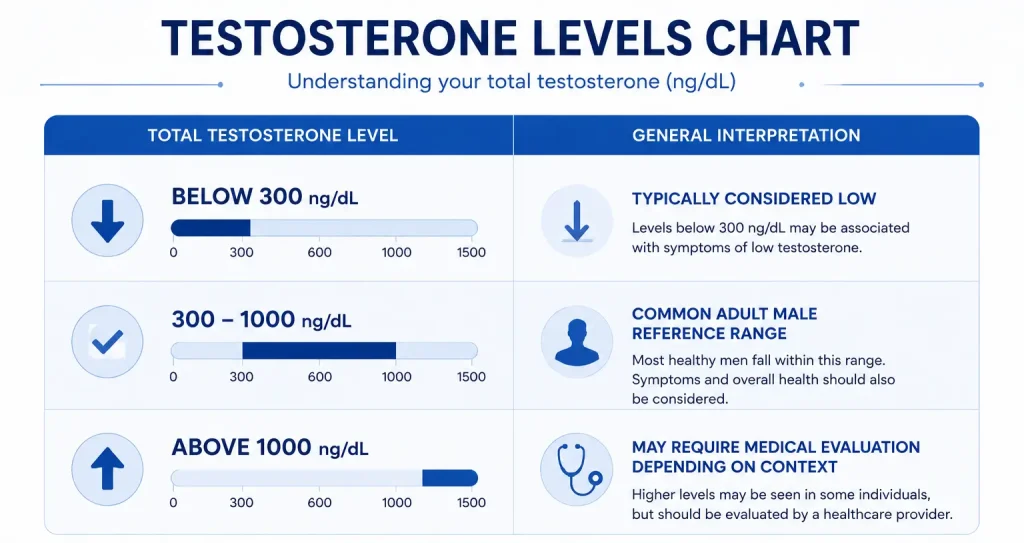
A diagnosis of testosterone deficiency typically requires both persistent symptoms and confirmed low testosterone levels on blood testing. Most medical guidelines consider total testosterone below approximately 300 ng/dL low, although laboratory reference ranges may vary slightly.
Common Symptoms of Low Testosterone
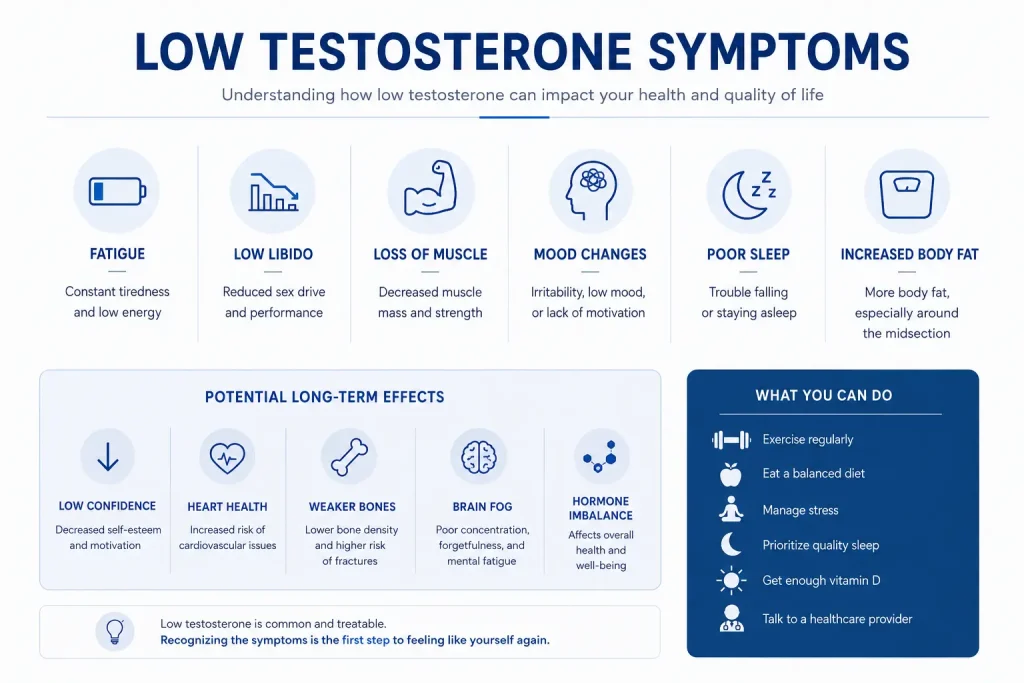
Low testosterone symptoms can affect physical performance, mental health, energy levels, metabolism, recovery, and sexual health simultaneously.
Many men initially dismiss these changes as stress, poor sleep, or simply “getting older.” In reality, testosterone deficiency symptoms often become more noticeable over time if hormone levels continue declining.
Sexual Symptoms
Sexual symptoms are often among the earliest signs of low testosterone.
Many men notice a reduced sex drive, fewer morning erections, changes in erectile function, or lower overall sexual satisfaction long before they consider hormones as a possible cause. Some men also experience fertility-related changes or reduced sexual performance.
Not every sexual health issue is caused by testosterone alone, but hormonal imbalance can significantly influence libido, erectile function, and sexual well-being.
Physical Symptoms
Many low T symptoms in men first appear physically.
Energy levels decline, workouts become harder to recover from, strength decreases, and maintaining lean muscle mass becomes more difficult even with consistent training and nutrition habits. Many men also notice increased abdominal fat, poorer endurance, disrupted sleep, and slower overall recovery.
Some men describe the feeling as if their body suddenly stopped responding the way it used to. Recovery takes longer. Motivation to train decreases. Progress in the gym slows down despite doing everything “right.”
Low testosterone can also influence body composition by affecting how the body stores fat and maintains muscle tissue over time.
Mental & Emotional Symptoms
The mental and emotional effects of low testosterone are often overlooked.
Many men report brain fog, lower motivation, poor concentration, irritability, mood changes, lower confidence, and reduced stress tolerance. In some cases, men describe feeling mentally “flat” or unlike themselves without understanding why.
Hormones are not the only factor influencing mental health, but testosterone plays an important role in mood regulation, cognitive performance, energy, and motivation.
Because these symptoms overlap with stress and burnout, many men normalize them for years before seeking evaluation.
Common symptoms of low testosterone may affect physical performance, mental clarity, mood, and sexual health.
Low testosterone rarely comes from a single cause. In many cases, several biological, metabolic, and lifestyle-related factors overlap.
Understanding the causes of low testosterone is important because proper treatment should focus on both hormone levels and the underlying issue contributing to the imbalance.
Natural Causes
Testosterone naturally declines with age. This gradual hormonal reduction is considered a normal part of aging, but severe or symptomatic declines should not automatically be dismissed.
Changes in sleep quality, reduced physical activity, increased body fat accumulation, and age-related metabolic shifts can all contribute to lower testosterone production over time.
Even though testosterone decreases gradually with age, persistent symptoms still deserve proper medical evaluation.
Medical Conditions
Certain medical conditions are strongly associated with testosterone deficiency.
Obesity, type 2 diabetes, sleep apnea, thyroid disorders, pituitary dysfunction, chronic inflammatory conditions, and metabolic syndrome can all affect hormone production and regulation. Certain medications and previous anabolic steroid use may also contribute to hormonal suppression.
Hormonal systems are closely connected. For example, poor sleep and obesity may simultaneously reduce testosterone levels while increasing inflammation and worsening metabolic health.
This is one reason comprehensive hormone evaluation typically involves more than checking testosterone alone.
Lifestyle Factors
Lifestyle habits play a major role in hormone production and recovery.
Chronic stress, poor sleep, excessive alcohol intake, sedentary behavior, overtraining without adequate recovery, and highly processed diets may all negatively affect testosterone levels over time.
Sleep is especially important. Testosterone production is closely tied to deep sleep cycles, which is one reason poor sleep quality is so commonly linked to fatigue, low libido, and reduced recovery.
Research has shown that even short-term sleep restriction can significantly reduce testosterone levels in otherwise healthy men.
How Low Testosterone Is Diagnosed
Symptoms alone are not enough to diagnose low testosterone.
Many symptoms overlap with stress, depression, burnout, sleep disorders, thyroid dysfunction, and other medical conditions. That is why proper blood testing is essential.
A comprehensive low testosterone test may include total testosterone, free testosterone, SHBG (Sex Hormone Binding Globulin), LH, FSH, estradiol, CBC, metabolic markers, and PSA when appropriate.
Testing is usually performed in the morning when testosterone levels are naturally highest. In many cases, providers repeat bloodwork to confirm results before making a diagnosis.
A proper evaluation also includes a detailed review of symptoms, medical history, medications, lifestyle habits, and long-term health goals.
Many men searching “how to know if you have low testosterone” are looking for a quick online checklist. In reality, diagnosis requires both symptoms and clinically accurate lab testing.
When to Seek Treatment
Many men delay evaluation because they assume symptoms are simply part of getting older.
But persistent symptoms should not automatically be ignored.
If fatigue, low libido, reduced motivation, poor recovery, sleep disruption, or body composition changes continue for months and begin affecting daily life, relationships, workouts, productivity, or overall well-being, it may be time to seek professional evaluation.
Low testosterone symptoms are often progressive. Men frequently adapt to feeling worse gradually without realizing how much their energy, performance, confidence, or quality of life has changed over time.
Persistent symptoms are not something you simply have to “push through.”
If symptoms continue despite healthy lifestyle habits, scheduling a free consultation may help determine whether hormone testing or treatment is appropriate.
Treatment Options for Low Testosterone
Low testosterone treatment depends on symptom severity, lab values, overall health, and the underlying cause contributing to hormonal imbalance.
For some men, lifestyle improvements create meaningful changes. Others may require medically supervised treatment to restore healthy testosterone levels and improve quality of life.
Lifestyle Improvements
Lifestyle interventions remain an important foundation of hormone health, even when medical treatment is used.
Improving sleep quality, resistance training consistently, reducing excess body fat, managing stress, improving nutrition, and limiting alcohol intake can all positively influence testosterone production, recovery, and metabolic health.
In many cases, lifestyle improvements also help enhance the effectiveness of future treatment plans.
Testosterone Replacement Therapy (TRT)
For men with clinically confirmed low testosterone levels and persistent symptoms, Testosterone Replacement Therapy may help restore testosterone to a healthier physiologic range under medical supervision.
TRT is not designed to create “superhuman” hormone levels or provide quick fixes. Legitimate treatment focuses on improving symptoms safely through individualized protocols, ongoing lab monitoring, and long-term medical oversight.
Depending on the patient, treatment may involve testosterone injections, topical creams, or customized dosing schedules designed around lifestyle, symptom severity, bloodwork, and overall health goals.
Many men report improvements in energy, libido, recovery, body composition, motivation, and overall well-being after beginning treatment, although results vary from person to person.
At Premier Hormone Health & Wellness, treatment plans are individualized rather than standardized. Patients receiving care through our TRT clinic are routinely monitored to evaluate testosterone levels, estradiol, hematocrit, cardiovascular markers, and overall symptom response throughout treatment.
Some treatment plans may include medications such as testosterone cypionate alongside supportive medications like anastrozole, when clinically appropriate.
Blood testing is the most reliable way to diagnose clinically low testosterone levels.
Addressing Underlying Conditions
In some cases, low testosterone is secondary to another health issue rather than the primary problem itself. Conditions such as obesity, sleep apnea, thyroid dysfunction, metabolic disease, medication side effects, and endocrine disorders may all contribute to hormonal imbalance.
Good hormone care focuses on identifying and addressing the underlying cause, not simply treating a number on a lab report. This is one of the biggest differences between medically supervised hormone optimization and self-diagnosis online.
Final Thoughts: Don’t Ignore the Signs
Low testosterone symptoms often develop gradually.
What begins as slightly lower energy can slowly turn into poor recovery, worsening sleep, reduced motivation, declining confidence, body composition changes, and lower overall quality of life.
Because these symptoms overlap with stress and aging, many men normalize them for years before seeking help.
The important thing is not assuming, guessing, or self-diagnosing based on internet checklists alone. Proper testing and medical evaluation matter.
For some men, improving sleep, nutrition, stress management, and recovery creates significant improvement. For others, medically supervised low testosterone treatment or TRT becomes an important part of restoring long-term health, performance, and well-being.
If you have been feeling unlike yourself for months or years, comprehensive hormone testing can help determine whether low testosterone may be contributing to the problem.
Early signs of low testosterone often include fatigue, reduced libido, poor recovery, lower motivation, difficulty maintaining muscle mass, and changes in mood or concentration.
How do I know if I have low testosterone?
The only reliable way to confirm low testosterone is through blood testing combined with a medical evaluation and symptom review.
What level is considered low testosterone?
Many medical guidelines consider total testosterone below 300 ng/dL low, although laboratory reference ranges may vary slightly.
Can low testosterone be treated?
Yes. Treatment may include lifestyle improvements, addressing underlying medical conditions, or medically supervised Testosterone Replacement Therapy (TRT).
When should I see a doctor?
You should consider evaluation if symptoms persist for several months or begin affecting energy, mood, sexual health, recovery, workouts, or overall quality of life.
This content has been medically reviewed by Kathleen Mishak : Nurse Practitioner